
Happy Wednesday.
Okay, okay. It’s officially happening. One company cleared a major FDA safety hurdle for the first-ever lifespan extension drug. For dogs.
Apparently, one pill a day could buy your old buddy a few more good years. So we’re raising a glass to science. And to all pooches everywhere.
That’s the kind of news we wake up for. Well, that and the marketing news…
Facebook uses AI mode to answer user questions, Threads celebrates a milestone with new features
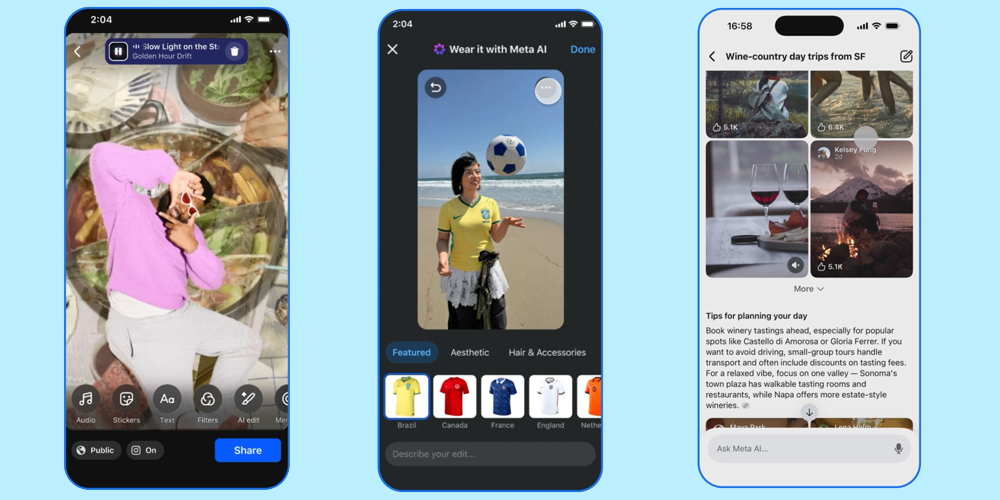
Turns out everyone wants to be the place you ask questions.
Ask, and ye shall receive…a Meta AI answer: Facebook launched AI Mode in search and now answers questions with AI-generated responses.
These outputs are pulled from public posts, Groups, and Reels instead of the usual link list. “Real answers from real people,” as Meta says.
Your organic content could now surface when Meta answers questions about products, places, hobbies, and everyday advice and give your brand more visibility.
However, Meta won’t say how it picks which content makes the cut, or whether you’ll ever know when your content gets used. So… optimize blindly, we guess.
Meanwhile, Threads is no longer the underdog: Three years after launch, the app hit 500M monthly active users, which lands it neck-and-neck with X’s 550M.
It has graduated communities out of beta for everyone, adding a dedicated communities hub in the sidebar, custom topic icons, and expanded recognition for top contributors.
And, live chats are rolling out to more communities with co-hosting and the ability to quote moments to your feed, plus local communities launching in Japan, Korea, and Taiwan.
The “Your Algo” tool is also expanding, letting users tell the feed what they want more or less of, live in the US, Canada, UK, Australia, and New Zealand.
Threads appears to be a serious second stage for live conversation and community building.
Get to grips with AI training courses, plus target B2B users sharper via Microsoft Ads
Turns out the platform that perfected the humblebrag also wants to make you better at your job.
Class is now in session: LinkedIn and Adobe’s new AI Essentials for Marketers hands you four role-based courses to sharpen up, free on LinkedIn Learning.
The courses cover digital marketing, content creation, social, and analytics. All of it ships in 47 languages, and finishing one earns you a certificate to show off on your profile.
The bigger story is access. This kind of training used to go to higher-spending customers. Now it’s open to everyone.
The timing tracks, too. LinkedIn says marketing job postings requiring AI literacy are up 113% year-over-year. These skills are in demand, and this is a low-effort way to catch up.
Speaking of jobs: Microsoft Ads now lets you target by LinkedIn job seniority across 10 levels, in both Search and Audience campaigns.
For B2B brands hunting decision-makers, that’s a big upgrade in precision. It’s live now across the Americas, EMEA, and APAC.
One asterisk, though: LinkedIn’s data is self-reported, so some of that targeting will land on unqualified users.
The free profile verification push helps, but accuracy still leans on user honesty. So no porkies.
Find global influencers in 48 hrs – who actually follow the brief!
UGC delivers 4x higher CTRs and 50% lower CPC than traditional ads.
But – trying to source and manage creators yourself is time-consuming.
Insense enables you to find brand-aligned creators within 48hrs through:
- Their vetted marketplace of 68K+ creators and micro-influencers from 35+ countries.
- Their influencer discovery tool provides access to 7M+ global creators to scale your influencer campaigns.
Major e-com brands use Insense to find their perfect creators to reach global audiences and run diverse collaborations from UGC to product seeding, influencer posting, Meta Partnership Ads, and TikTok Spark Ads.
- Quip saw an 85% influencer activation rate with product seeding
- Revolut partnered with 140+ creators for 350+ UGC assets
- Matys Health saw 12x increased reach through TikTok Spark Ads
Be funny, and people will forgive your AI mistakes

…More than they would do without humor, anyway.
Science Says dug into why we forgive sloppy humans but rage at sloppy AI.
The fix is pretty funny: We hold AI to an absurd standard. A bot that nails 98% of tasks still gets criticised for the 2% it fumbles.
A junior employee making those same errors would be just short of a prodigy. The machines get no such grace.
Why this matters: Usefulness alone won’t win adoption. Those rare, “easy” misses loom far larger in our heads than the hard wins.
The tactic that works is self-deprecating humor. Picture a chatbot that whiffs and replies something self aware. Like “My apologies, I’m more artificial than intelligent today.”
Across 4 experiments with 1,919 people, that move made users up to 48% more forgiving versus a humorless apology. Cheap to build, oddly powerful.
Not all jokes are equal, though. Positive, chipper humor lifted forgiveness 34% for bad recommendations; the self-roasting kind hit 48%.
In after-sales, the split repeated: Around 16% for friendly versus 26% for self-deprecating. Laughing at yourself beats laughing with the customer.
The bottom line: Severity is the catch. A wrong jumper color? Joke away. Denying a rightful refund? You might want to keep a lid on the humor. No one’s laughing with you there.
It works because humor cools us down. It eases tension, regulates the anger a mistake provokes, and nudges us to see the bot more warmly.
Sephora’s beauty chatbot still leans on sorries and long explanations when it slips.
For low-stakes blunders, that earnest tone is the wrong instinct. A quick self-roast would land far better than a paragraph of apology.
One more tweak: Have the bot say “thank you for bearing with me” rather than “sorry.” Gratitude reads warmer than guilt.
So give your AI permission to look silly when the stakes are low. The dial-up jokes earn more patience than another robotic “we apologize for the inconvenience.”
This AI connector turns newsletter ad buying into a conversation
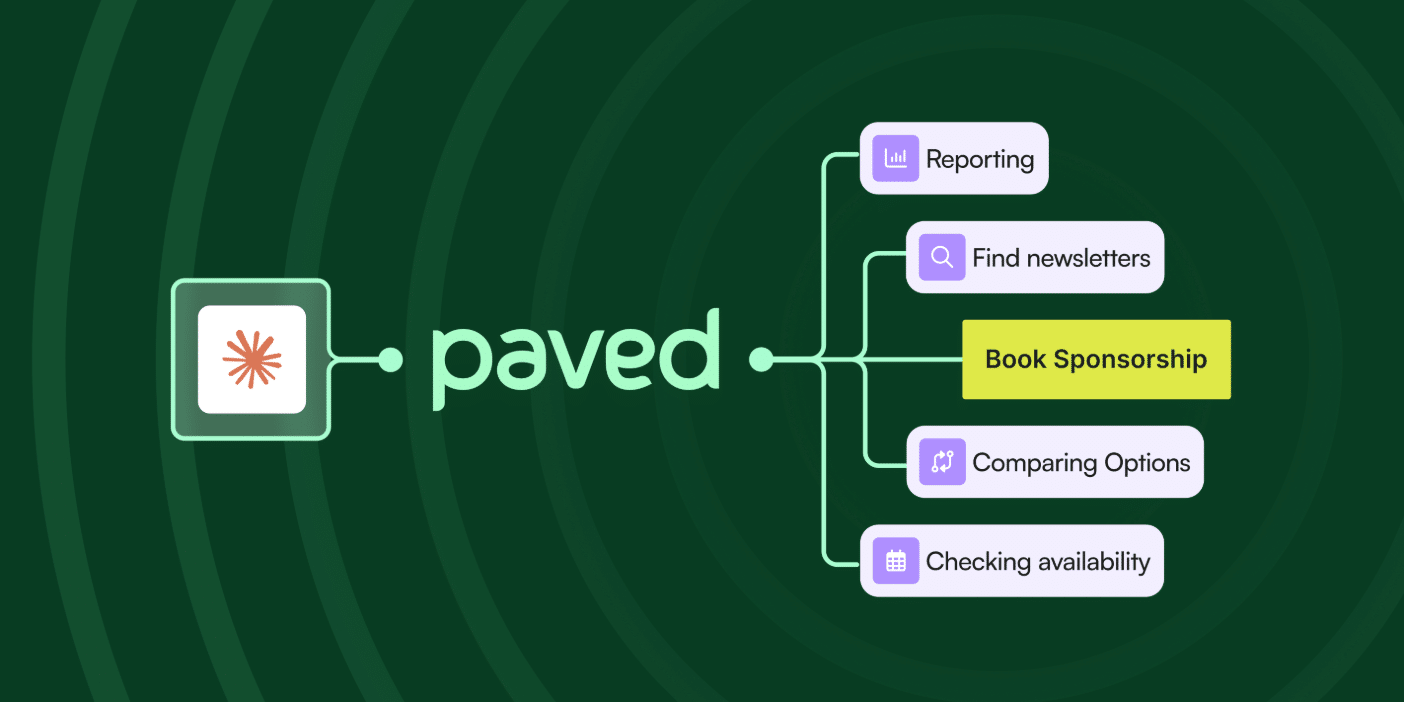
If you’ve ever managed newsletter sponsorships at scale, you know the pain: finding the right publishers, checking availability one by one, comparing rates across spreadsheets, then doing it all again next month.
Paved just launched the first MCP for newsletter advertisers. Connect Claude to a marketplace of 3,000+ curated newsletters. Search by audience, compare rates and engagement, check availability, book placements, and track performance—all in one conversation.
Shoppers cut their research in half
Your potential buyers appear to get better at spotting winners and losers without having to scour through every corner of the internet.
At least the data seems to show it:
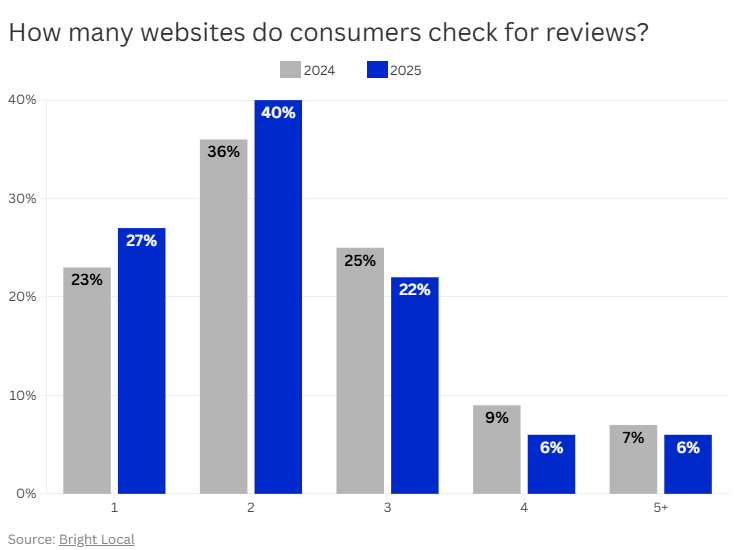
The Sweet Spot: Checking 2 websites for reviews is the most common behavior, growing from 36% in 2024 to 40% in 2025.
The number of people checking only 1 website rose to 27%, while those checking 3 or more sites is declining.
And only 6% of shoppers now bother checking 5+ websites, down from 7% the previous year.
The stats show that the review fatigue might be upon us. Users might’ve found a few trusted sources and are sticking to them.
So make sure you’re visible on the top two platforms in your niche. Otherwise, you basically don’t exist to modern shoppers.
What else you can do: Focus your reputation management on the “Big Two” platforms for your industry (e.g. Google and Amazon).
Don’t spread your review-requesting efforts too thin.
Consumer research habits are condensing fast. Pro subscribers get weekly insights on decision-making shifts like this—plus strategies to show up in the right places at the right time.
AI MARKETING: This daily newsletter condenses the latest and greatest AI developments into a 5-minute read. They read the noise, pull out the signal, and explain what actually matters for work, strategy, and the tools your team is already using. Trusted by 700k+ readers. Subscribe right here.*
TIKTOK: Brace yourself. Kapwing found 59% of videos on a fresh US account’s For You feed are AI slop, triple YouTube’s rate. Kids content fares worst, with one tag at 97%. New users meet more bots than humans, so make your real, human work stand out fast.
PINTEREST: Two AI ad tools just landed in the Performance+ suite. New customer acquisition lets you target and bid higher for fresh buyers, and it lift conversions 64% in testing. Meanwhile, one-click shopping campaigns also launch from your Shopify setup. Both worth a test.
TIKTOK: Remember newspapers? Aussies under 25 mostly don’t. The 2026 Digital News Report shows 60% have never used one for news, while this app now informs nearly half of 18-to-24s. Social media ranks second overall and chatbots are gaining ground, so plant your messages where your audience scrolls.
*This is a sponsored post.
There’s an 8-letter word that can lose a letter and still make a word.
Take another letter away and it makes another word. Keep doing that until you have one letter left—and it still makes a word. What is the word?
You can find the answer here.
Interested in advertising in one of our newsletters?
Connect with over 100,000 of the world’s best marketers who read a newsletter by Stacked Marketer.