
Good morning.
Yours truly went out for a casual game over the weekend. Nothing serious. A little running, a little jumping, a lot of confidence.
The knee disagreed. Now we’re writing this with a splint.
Anyhow, stretch first. Don’t force it. Same goes for your budget, your bandwidth, and your Q4 calendar.
Checkout moves into AI Mode by default, and Amazon locks out Muse
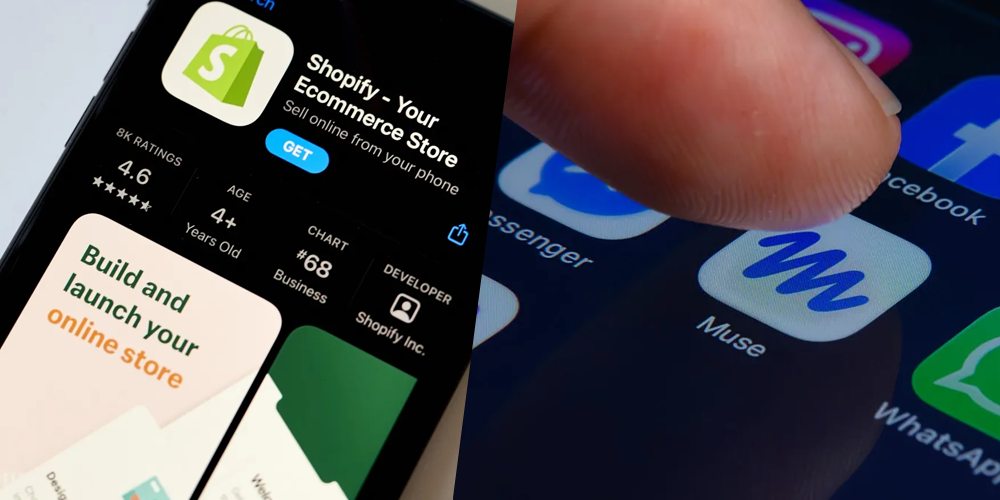
Oprah energy in Mountain View this week: you get a buy button, and you get a buy button… Everyone gets a buy button!
Surprise, you’re opted in: Google is switching on native checkout in AI Mode and Gemini for eligible US Shopify merchants, by default.
Merchant Center is even emailing sellers that there’s “nothing for you to set up.” Which is exactly the problem.
The Google-hosted checkout doesn’t support custom pixels, client-side Google Analytics, bundles, or some checkout blocks. Want the sale on your own site? Switch it off under Sales channels > Agentic.
The shelf is shrinking, too: AI Mode is testing brand-query clicks that skip the comparison panel and go straight to the retailer. Other stores in that overlay lose their shot.
It also builds comparison tables with images and reviews, so your product data does the selling before anyone reaches your page.
Meanwhile, the bouncer’s working overtime: Amazon blocked Meta’s Muse agent after Meta refused to remove Amazon from its reach.
Muse still plugs into Shopify, though. And it’s outpacing ChatGPT’s early mobile launch:
- 1.8M iOS downloads in the US and Canada, vs. ChatGPT’s 1.3M
- 642K US daily users, vs. 231K
Amazon can afford to turn those shoppers away. For most stores, it’s time to set an agent policy before someone sets it for you.
Just in: Threads ad accounts go stand-alone, Snap looks into microdramas, and more
Like a Succession finale, these days delivered a breakup, a report card, and a whole lot of drama. Let’s get into it.
Threads finally moved out of the family home. Meta no longer requires matching Instagram and Threads usernames to run Threads ads. Brands with no Instagram profile can now advertise directly.
With Threads at 500 million users, that’s fresh reach for brands that skipped IG. The rollout is gradual, so check your Ads Manager.
Pinterest started grading your homework. Its new campaign optimization score predicts performance based on four factors:
- Performance+ adoption
- Creative variety
- Broad targeting
- Steady budgets
Translation? The more control you hand the algorithm, the higher you score. Pinterest suggests five or more distinct ads per ad group.
Snapchat turned your DMs into chart-toppers. Snap-to-song converts chat messages into AI-generated tracks, next to new AI photo retouching and scene remixes.
All of it sits behind the paid Lens+ tier. That’s another nudge toward subscription revenue.
Soap operas went vertical, and Snapchatters are hooked. Snapchat’s Ipsos-backed report found 42% of users watch microdramas daily, often sharing clips with friends.
For brands, that means sponsoring short-drama creators or producing your own romance or thriller series. Low production budgets welcome.
What if doing nothing beat 90% of professional fund managers?
The investment industry sells complexity. Research. Timing. Alpha.
The data tells a different story. Over any 20-year period, a simple world index fund has outperformed more than 90% of professionals. Most investors who try to beat the market end up paying more in fees to underperform it.
The edge isn’t intelligence. It’s patience.
But patience is hard when your portfolio feels abstract. A passive fund is just a ticker on a screen. The thousands of companies inside it, the businesses you actually co-own, stay invisible.
90 Percent fixes that. Every week, it pulls one company at random from the world equity index and tells you what it actually does.
- The Brazilian company that makes the electric motors inside almost everything that spins.
- The Florida company that sells your airline its spare parts at half the price.
- The Japanese hardware company hiding inside every factory.
One company. Every week. Yours to discover.
Tips on how to test your Google Ads campaigns

You can’t get enough of good-hearted Google Ads advice.
Well, Michelle Morgan published 21, sorted by what’s broken in your account and we pulled the five that earned a slot in your testing queue.
1) Impression share lies. Absolute top of page tells the truth: In Auction Insights, hit Segment, hover Time, pick week or month.
Rising impression share across you and your competitors means nothing because everyone’s spending more. Falling absolute top of page rate while costs climb means you’re being outbid.
2) Write ad copy that repels people: High CTR with no conversions usually means your copy sounds like it’s for everyone.
“Every Day Gold Watches” gets clicks from people who will never buy a Rolex. “Luxury Gold Watches” filters them out and sets expectations for whoever clicks anyway.
Our take; Deliberately tanking CTR to fix CVR feels wrong and works anyway. And it’s not just for Google Ads.
3) Optimized targeting is Google’s most expensive checkbox: It sits at the ad group level and lets Google wander past your targeting whenever it fancies.
Michelle has yet to find an account where it beats the targeting already in place.
It’s also another tip that applies across most platforms, where “optimized reach” and similar features actually hurt results.
4) Budgets don’t like surprises: Dumping budget into a Target ROAS or Target CPA campaign tanks it. Cap increases at 20% a day and lets the algorithm breathe.
On maximize-style strategies, don’t wait for the “limited by budget” alert because it lags. Add the daily average cost column and check the last seven days yourself.
5) Go fix your AI Brief, because you probably use one: It’s new enough that most accounts haven’t seen it yet, but it shapes which queries you match, which audiences you reach, and what your ads say.
The Crew’s take: Vague input, vague output. Write it properly before it writes your campaigns.
How to actually test any of this? Set the goal before you start, or you won’t know if you won. Two weeks is the realistic minimum.
Three months is where results stop moving, and if you’re nowhere near significance by then, call it anyway. One or two variables, max.
Are you growing your email list, or your email bill?

Somewhere in your Klaviyo account is a contact who bought once in 2024 and ghosted. You’re still paying rent.
The mechanism is the pricing model. Klaviyo bills per profile stored and auto-upgrades your tier when signups cross a threshold. A good popup month raises your bill by itself.
Brevo prices on sends. A 25,000-contact store sending 40,000 emails a month saves $4,248 a year.
Spending $1,000+/month on Klaviyo? Share an invoice, get 50% off your first three months.
Mid-tier spend, top-tier AI reliance
When it comes to shopping with AI, consumers aren’t using bots to buy a stick of gum or a luxury yacht. They’re parking their trust right in the middle.
Data breaks down where shoppers lean on AI most:
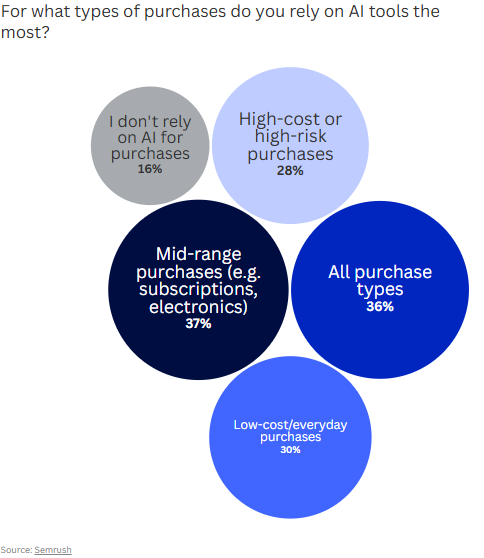
- The sweet spot: Mid-range buys like subscriptions and electronics lead at 37%, with 36% trusting AI across all purchase types.
- Low-cost items sit at 30%, while high-risk or high-cost purchases lag at 28%.
- Holdouts: A mere 16% avoid using AI for purchases completely.
Shoppers trust AI to research moderate purchases where quick comparison saves time but financial risk remains manageable.
High-stakes buys still demand human reassurance, making mid-tier products AI’s prime promotional battleground.
Selling mid-range products or SaaS? Structure your pricing, feature matrices, and technical specs so LLMs can easily parse and surface your brand during customer evaluation searches.
BENCHMARKS: See how your campaigns stack up. Growth Channel analyzed H1 2026 performance across CTV, display, online video, native, audio, and DOOH to give marketers real benchmarks for planning and optimizing campaigns. Get the report.*
AI MARKETING: ChatGPT still handles half of all AI prompts, but that’s down from 70% in January, per Comscore’s U.S. data. Gemini climbed from 17% to 30% and Claude from 2% to 11% by June. If your AI visibility plan starts and ends with ChatGPT, it’s time to widen the lens.
MICROSOFT ADS: Describe your dream customer in plain English, and Copilot builds the audience and suggests segments. It’s a closed beta for Audience campaigns in the US, Canada, UK, and Australia. However… No exclusions or LinkedIn audiences, and up to 72 hours before activation.
GOOGLE ADS: Bipods, sights, slings, mounts and braces can run on Search from October, in a six-month U.S.-only pilot. Firearms, ammo, regulated parts and permit-required accessories stay banned, and so does every other surface and country.
GOOGLE ADS: Smart Bidding may need up to around 50 conversions or three conversion cycles to calibrate after a change, per Google’s updated guidance. So stop counting weeks and start counting conversions.
*This is a sponsored post.
Always in you, sometimes on you;
If I surround you, I can kill you.
What am I?
You can find the answer here.
Interested in advertising in one of our newsletters?
Connect with over 100,000 of the world’s best marketers who read a newsletter by Stacked Marketer.