
Good morning.
Just when you think 2026 has run out of surprises, a company files to go public by warning investors its own product might end humanity.
Anthropic’s IPO prospectus spends 80 pages on risk factors and only 48 on the actual business. Bold way to ask for $2 trillion.
Three months left in the year. Please, 2027, be boring.
App discovery moves into ChatGPT and its ads get their first benchmarks
Clippy walked so OpenAI could run.
At DevDay, the company dropped 20+ announcements for its 1.2B weekly users, and most of them might touch your distribution strategy.
Move over, App Store: ChatGPT will now suggest apps mid-conversation when one fits the task. Users connect and use them without leaving the chat.
Plugins also got app-like upgrades:
- A dedicated home in the sidebar.
- Interactive panels and file viewers.
- Better ranking and in-chat recommendations.
If your customers discover tools through AI chat, your product needs a presence there. OpenAI hasn’t announced a revenue share yet, so enjoy the free shelf space.
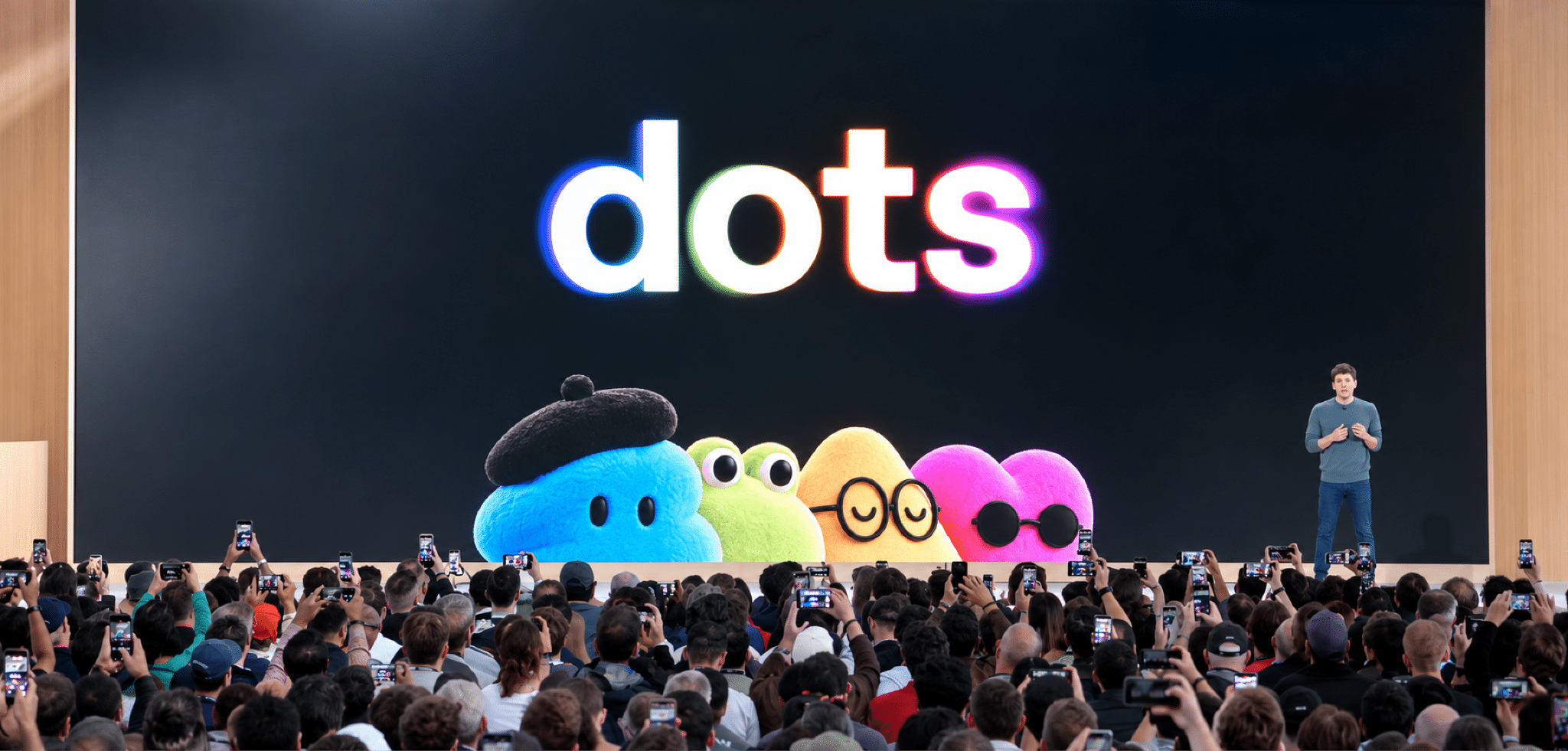
Meet your new gatekeeper: OpenAI also launched Dots, always-on agents that connect to 4,000+ apps and run “proactive research” in the background.
In practice, an agent might pick your tool before a human does. Adweek pits Dots against Meta’s Muse, and OpenAI tested it internally on email marketing.
Microsoft, you seeing this? Space, Pages and collaborative Slides make ChatGPT look a lot like an office suite.
Now for the ad numbers: ChatGPT ads average a 0.73% CTR in the US, while Brazil, Mexico, Japan and South Korea hit 1.21% to 1.91%.
Advertisers are still experimenting. Only Jotform and Resume.io stayed in the top 10 for all 20 weeks. We’d benchmark against these numbers before judging your first campaign.
We wonder if Clippy would be proud of what assistants can do now with the help of AI…
Speaking of assistants, there’s some news from Amazon that could affect your holiday season.
AI runs the ads now while brands can brief Alexa
Voltron would approve. At unBoxed, Amazon merged its ad formats into one AI-run robot, fresh off nearly $20B in Q2 ad revenue.
One console to rule them all now goes by Amazon Ads Agent, which folds the DSP and ad console together.
Inside, DVA+ bundles Sponsored Display, Sponsored TV and programmatic display, video and audio into one format.
The timing stings a little: DVA+ rolls out from late October through year end, with Brand+ and Performance+ at the wheel. Advanced settings still hold the manual controls.
Amazon’s own figures do the selling:
- +25% unique customers and −10% CPM from chat-based targeting
- 41% new-to-brand sales for Canine Naturals over 206 days
Alexa’s script is now for sale, too. From January 2027, Branded Conversations will let US brands brief Alexa on differentiators, comparisons and bundles.
Reporting covers prompt-level clicks, conversions and ROAS.
Trust is the catch. Over half of US adults would trust AI picks less if advertisers shaped them.
Yet CEO Andy Jassy says shoppers who click sponsored prompts convert 48% more and spend 21% more.
Your faucet order might book a plumber next. Sponsored Services puts Yelp pros on product, order confirmation, and tracking pages, with “Call” and “Quote” buttons.
It starts in US home and auto categories, and it spots the need before the customer even searches.
Bottom line? Check your Q4 settings now and start drafting that Alexa brief before January.
Find creators in seconds. UGC for Q4 delivered in 14 days.
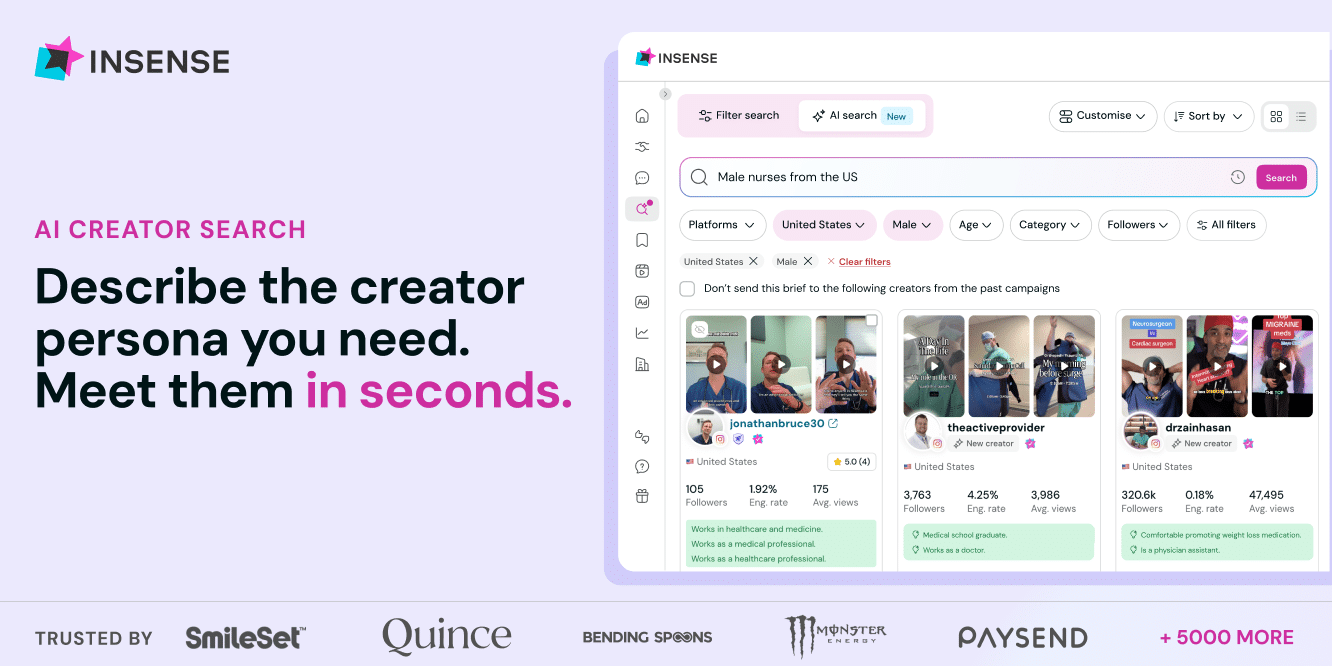
Finding the right creators usually means stacking a dozen filters, scrolling through profiles and chasing DMs.
Insense skips that part.
Type who you’re looking for in plain English, like “male nurses in the US” or “interior designers in Berlin” and AI search matches you with vetted creators from 115,000+ across 57+ countries – in seconds.
5,000+ consumer brands, mobile apps and agencies use Insense to:
- Find niche creators who actually fit. Matches are based on 9 years of Insense data from brand videos, deals and screening questions, not just a category tag.
- The right creators apply to you in hours, or invite creators in seconds.
- Work only with vetted talent. Just 2 in 10 applicants pass Insense’s manual vetting.
- Lock in terms before your product ships. Deliverables, deadlines and usage rights are agreed upfront, and payment is released only when you approve the content.
- Go from seeding to Meta Partnership Ads. Brief creators for organic posts, UGC ad creative or both, then amplify the best ones as partnership ads.
And if a creator goes quiet, Insense’s moderation steps in, so you’re not the one chasing them.
Want to learn more? Book a free strategy call by October 16th and receive $200 for your first campaign.
A 20-second check tells you if AI search can even see your page

For years, “site:” and a quoted snippet told us whether Google held our page.
In the AI-search era, that toolkit simply doesn’t exist.
Chris Green, writing in Search Engine Journal, has a fix for this blind spot every SEO is squinting through right now. It costs nothing and needs no tooling.
Make the chatbot do the searching. Grab a meaningful 20-30 word passage from your page, then prompt: Search for “your snippet here” and return any results that contain that exact text only.
Extra tip: Pick passages loaded with names, numbers, and uncommon phrasing. Generic marketing copy won’t isolate your URL from anyone else’s.
The reasoning? A hit proves three things at once. If your URL comes back, the search source behind that chatbot holds your content, the content is correctly attributed to your URL, and the page is technically search-friendly.
What if it’s a miss? You get a checklist. Chris runs the usual suspects: orphaned pages nothing links to, WAF or robots.txt blocks, rendering and text-extraction failures, noindex directives, stray canonicals, and content too thin to be worth indexing.
None of this is new tech SEO. It’s the same audit we’ve always run, triggered by a new symptom.
Run it five times before panicking. Chatbots pull from different sources on different runs, and freshly published pages sometimes just need time.
Test repeatedly, change the snippet, and interpret the output.
Retrieval is just the floor: Being retrievable and being cited are separate problems, and this method only clears the first hurdle.
Still worth doing? Hard yes. Nobody wins a ranking fight they were never entered into.
And maybe your content can be best friends with Claude, ChatGPT, Gemini, Perplexity, and all others.
The free Thursday newsletter that explains why customers actually buy
Sherlock had deductions. You get the science behind why people actually buy.
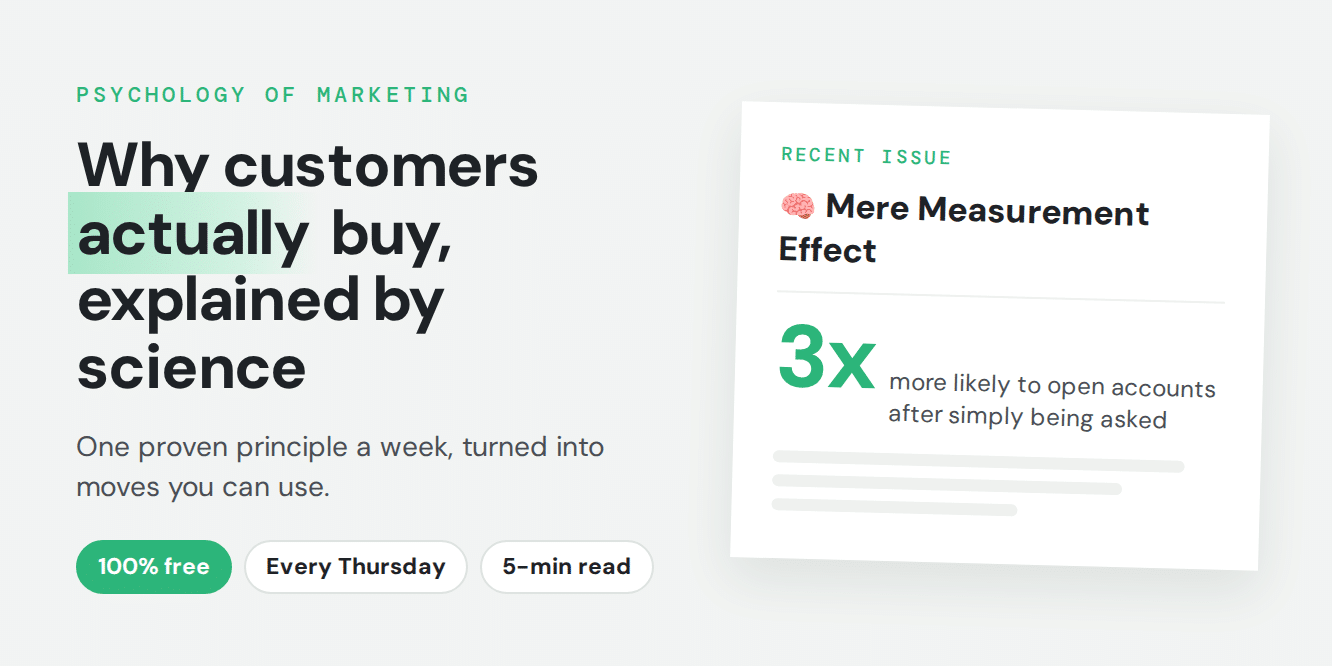
Every Thursday, Psychology of Marketing breaks down one proven principle and turns it into moves you can use.
Take a recent issue: simply asking customers about buying made them 3x more likely to open new accounts. Then: how to use it.
- Free, 5-minute read
- Real studies, real brands
- Tactics you can test this week
Readers agree. “Awesome insights with tangible info on how to apply,” says Jenna.
Big brands chase robots, smart brands chase humans
Are you writing for a person with a coffee in their hand or a robot in a server farm?
Sounds weird, but your answer likely depends on the size of your company.
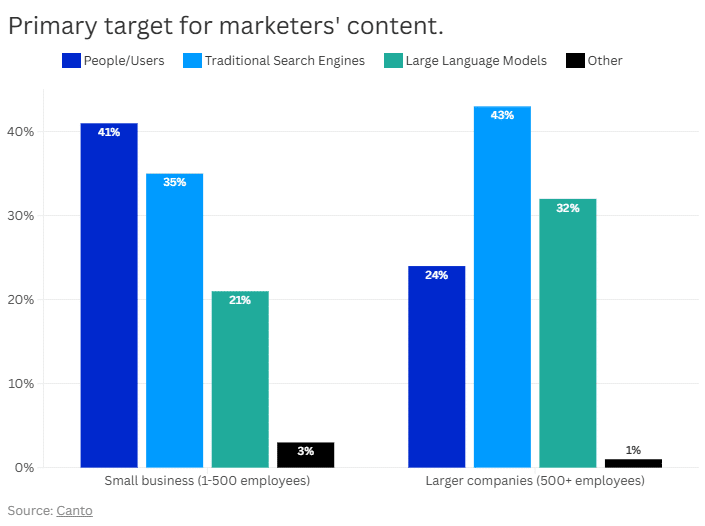
There is a fascinating split in strategy based on company size.
- Small businesses (1–500 employees) are significantly more focused on people, with 41% targeting users directly compared to only 24% of larger companies.
- Large companies (500+ employees) are prioritizing robots: 43% target traditional search engines and 32% are specifically writing to influence Large Language Models (LLMs).
For small businesses, search engines (35%) and LLMs (21%) remain secondary to direct human engagement.
Large corps are playing the volume and “discoverability” game, trying to win the AI-summary war.
Small businesses are leaning into their advantage: human-to-human connection and personality.
If you’re a small-to-medium business, double down on “opinionated content.”
AI and search engines favor generic “correctness,” but people buy from humans with unique perspectives and shared values.
AI MARKETING: This daily newsletter condenses the latest and greatest AI developments into a 5-minute read. They read the noise, pull out the signal, and explain what actually matters for work, strategy, and the tools your team is already using. Trusted by 700k+ readers. Subscribe right here.*
META: Muse, Meta’s personal AI agent, just picked up small business skills in the US and Canada. You connect tools like Shopify, Klaviyo, QuickBooks, and your Meta ad accounts, then hand it a goal. It drafts campaigns and flags odd expenses, but nothing publishes, sends, or spends without your approval.
FACEBOOK: Forum, Facebook’s standalone Groups app in the US, is testing a comparison mode for its AI Ask tool. Weighing running shoes or gifts? Ask pulls together recommendations from group posts. If people discuss your product in groups, those threads now work like reviews with a search bar.
GOOGLE: Brodie Clark spotted a test where a sponsored product grid entirely replaces the organic one in search results. The only tell? A “Sponsored products” title that he says blends in way too well. If this sticks, expect ad CTR to jump and your free product clicks to shrink.
SHOPIFY: Browser agents can now read, fill, and submit checkouts on Shopify stores through new WebMCP tools. Buyers still confirm the order, and the agent hands control back for steps like 3D Secure. You don’t need to set anything up, so AI shoppers can already go from product discovery to order confirmation.
E-COMMERCE: Adobe expects US online holiday sales to hit a record $275.1 billion this season, up 6.7%. The sneaky stat? AI traffic to retail sites should jump 130%, with Thanksgiving up 159%. Social media and affiliates should also see the biggest revenue share gains.
*This is a sponsored post.
I’m as small as an ant, as big as a whale. I’ll approach like a breeze, but can come like a gale.
By some I get hit, but all have shown fear. I’ll dance to the music, though I can’t hear.
Of names I have many, of names I have one. I’m as slow as a snail, but from me you can’t run.
What am I?
You can find the answer here.
Interested in advertising in one of our newsletters?
Connect with over 100,000 of the world’s best marketers who read a newsletter by Stacked Marketer.