Happy Friday.
Yes, it’s Friday again. Weeks used to feel like weeks.
Now they feel like sprints someone forgot to schedule. Blink, and there’s a new AI model. Blink again, and your March strategy is outdated.
We’d suggest slowing down to smell the roses, but knowing everything moves, the roses might’ve already pivoted to video.
ChatGPT owns standalone AI referrals despite Google’s domination, and its ads are going global
The machines have opinions about you now. Best make sure they’re flattering.
Start where the traffic is: Previsible’s 19-month study found Google’s AI Overviews and AI Mode drive more AI traffic than every LLM combined.
Among the challengers, there’s really only one. ChatGPT carries 92.4% of standalone referrals.
But winning ChatGPT is a moving target: Two new analyses found its hidden retrieval pipelines can swap your cited sources between identical runs.
There’s no single visibility score to chase. Plain, crawlable, text-heavy pages with clear pricing are what survive the shuffle.
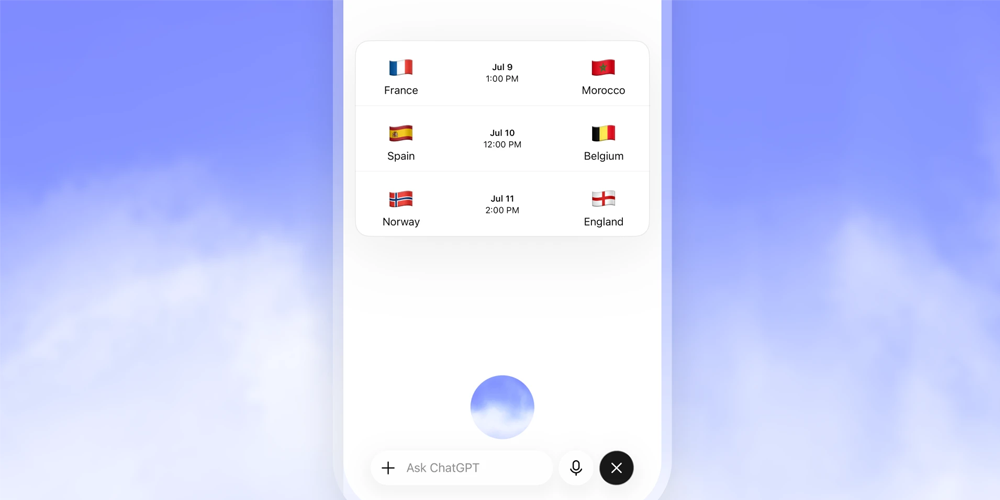
And soon you might not get the click at all: OpenAI’s GPT-Live lets ChatGPT Voice search and answer aloud, sometimes with visual cards.
Whether spoken answers name sources is the detail to watch.
Meanwhile, authority is the new follower count: Brands are treating AI mentions as pre-vetted shortlists.
As a result, creators have started “optimizing” so they start appearing among AI searches. One creator’s inbound inquiries jumped 50% off a single niche press mention.
Speaking of monetization: OpenAI is racing its ad pilot into France, Germany, Ireland, and Singapore, nearly every major market within a year.
It’s still only asking for test budgets, so watch this one. Ads are slowly going global.
Google’s busy week wraps up with new travel campaigns, ad transparency, and a bidding shake-up
Google clearly didn’t get the memo about slow summer Fridays.
Five updates dropped, and here’s what actually matters for you.
Pack your bags: Google Ads is expanding its Travel campaign beta to Things to Do and Events.
Sell attractions, tours, or tickets? You can now test the campaign type as a controlled experiment, not a replacement.
Small but shiny: Google is also testing favicons across every link in sponsored sitelinks, not just the main listing.
If the test is successful, sponsored ads will take up even more visual attention on the SERP.
Coming clean: A new “How this ad was made” panel will flag AI-made ads across Search, YouTube, and Discover.
Used AI to build ads outside Google’s tools? You’ll get a control to self-declare it, and in some regions, a label may appear whether you like it or not.
Mark your calendar: On August 17, Smart Bidding changes mean budget-limited campaigns will hug the target you actually set.
Running $20 against a $35 target? Lower it before rollout, or watch efficiency drift.
Last one to watch: Google is also reportedly testing google.com/goto passthrough URLs in results, which could quietly break your tracking and third-party tools.
Phew, that’s a lot right before the weekend, isn’t it?
Why generic landing pages are quietly killing conversions
For years, marketers optimized the funnel.
Today, they’re optimizing the person.
The creator who introduced the product. The affiliate who earned the click. The customer who referred a friend. The story behind the purchase matters just as much as the purchase itself.
Yet most brands still send every visitor to the same generic experience.
The next generation of ecommerce won’t be won by the brands with the biggest ad budgets. It will be won by the brands that make every customer journey feel personal.
That’s why brands are choosing Superfiliate.
Superfiliate brings every creator-led initiative into one platform, helping Shopify brands manage influencer marketing, UGC ads, YouTube, Meta, and TikTok Shop while creating personalized product experiences that drive higher conversions and measurable growth.
Managing creators across disconnected tools wasn’t built to scale.
See how Superfiliate can make creator-led growth your competitive advantage.
One million keywords reveal that search is alive, but lives at a different address
Fractl and Search Engine Land ran the numbers on over a million high-volume keywords and 1,004 consumers to test Gartner’s big 2024 prediction.
Turns out the future arrived early, but not the way the doomsayers wanted.
1) Gartner lowballed the decline. It said traditional search volume would drop 25% by 2026. The real figure was 29%, across a huge dataset of 35.4 billion monthly searches.
The bears were right about direction, wrong about magnitude. Search is shrinking faster than the analysts guessed.
2) But the volume didn’t vanish. 285,489 declining keywords represent 10.29 billion in monthly volume.
But 140,835 growing keywords? 10.31 billion. Net change across the whole dataset: +16.8 million searches.
Verdict: Demand isn’t collapsing. It’s relocating to a different set of words and those are the ones worth ranking for.
3) Your vertical decides your fate. FinTech got hammered (-37.7%), with HealthTech and Wellness close behind.
Why? Information-heavy categories get fully answered inside the chat window. Meanwhile, SaaS volume is up 48% and Lifestyle 40% because “recommend a couch” still ends in a branded search before anyone buys.
What to do: Benchmark before you panic. HealthTech should brace for pain above the 29% line. SaaS and Lifestyle can ignore the collapse narrative.
4) Brand mentions are the new rankings. 70% of consumers use AI more than last year, but only 17% search less. And 59% say they’ll visit a brand’s site after an AI chatbot recommends it.
Nearly one in five buy on an unverified AI recommendation, no second opinion. That’s a scary realization.
Our take: If AI answers your category completely with no next click, you need an AI visibility strategy, not just an SEO one. Showing up in the answer is the whole game.
AI is disrupting search, no doubt about it, but it’s still a discoverability game. The challenge is building the authority that makes you the answer, wherever that answer shows up.
When everyone’s using the same marketing playbook, psychology gives you an edge

Most marketers pull ideas from the same formulas, frameworks, and templates.
There’s no harm in using what works—but it also means your offer risks blending in.
But marketers who understand how people actually make decisions know how to package powerful offers and stand out—even when they’re selling similar things as their competitors.
Want to receive one psychological principle each week so you sharpen your instincts for positioning and persuasion?
Don’t make your checkout feel like a trip back to 2005
You’ll lose money.
Today’s shoppers expect their digital wallets to be as ready as their physical ones, and they love the flexibility of BNPL (Buy now, pay later).
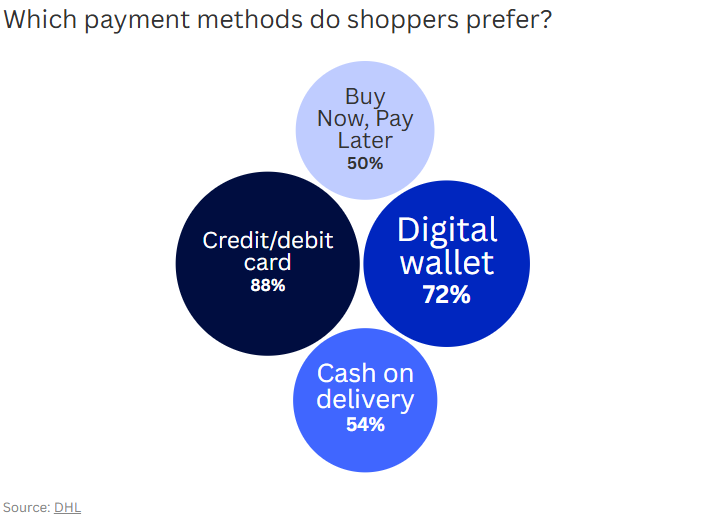
The King of cards: Credit/debit cards remain the standard at 88% preference.
Digital wallets have surged to 72%, becoming a “must-have” for any modern e-commerce site and 50% of shoppers now prefer Buy Now, Pay Later (BNPL) options, showing how critical credit flexibility has become.
Payment variety is now a competitive advantage.
By offering BNPL or digital wallets (like Apple Pay/Google Pay), you’re reducing the time to click. Every extra field a user has to type is a chance for them to change their mind.
Integrate at least one “one-click” payment option (like Apple Pay) and one BNPL service (like Klarna or Affirm).
This caters to both the speed-seekers and the budget shoppers. It’s a win-win.
AI MARKETING: This daily newsletter condenses the latest and greatest AI developments into a 5-minute read. They read the noise, pull out the signal, and explain what actually matters for work, strategy, and the tools your team is already using. Trusted by 700k+ readers. Subscribe right here.*
GOOGLE: Nick Fox says Search hit its highest usage ever on July 7, right as Argentina clawed back a win over Egypt. No figures, though, and “record usage” isn’t “record clicks.” People still flock to Search for live moments, but that traffic won’t necessarily land on your pages.
YOUTUBE: Edison data shows YouTube edged past Spotify as the UK’s top podcast service, 29% to 28%, a first on record. The one-point lead is slim, but the trend line mirrors the US crossover from two years back. If you’re planning a UK show, video seems like a nice choice.
SOCIAL MEDIA: New Pangram data suggests 41% of long-form posts you scroll past on LinkedIn are fully AI-written, plus roughly a third of longer X posts. AI slop isn’t just hiding on SEO farms, and we can’t say we’re shocked.
META: France’s antitrust regulator found the company likely abused its dominance, ordering a payment plan within 15 days over “neighbouring rights”, which are EU rules letting publishers charge for digital reuse of their content. Some haven’t been paid since 2025. Part of a wider publisher-vs-tech fight now spilling into AI training.
LINKEDIN: The platform itself says two to three posts weekly, longer updates, and replies within the first hour are important. It also shared LLM optimization tips, with the first being to lead your opening line with keywords, since that becomes your URL.
TIKTOK: Northeastern researchers found the algorithm treats your “not interested” taps as temporary. It cuts unwanted content by 84% at first, then slowly relapses, betting your watch behavior will override the objection. Flag something once, glance at it later, and it floods back. And that explains so much of our own personal experience too…
*This is a sponsored post.
You use a knife to slice my head,
And weep beside me when I’m dead.
What am I?
You can find the answer here.
Interested in advertising in one of our newsletters?
Connect with over 100,000 of the world’s best marketers who read a newsletter by Stacked Marketer.