
Good morning.
So we found out that X is paying $175K for AI-generated versions of The Odyssey, ranked by impressions first and quality second.
Yep. Three millennia of Western literature, flattened into a prompt.
Odysseus survived the cyclops. Not sure he’d survive this kind of sloppening.
Meta takes your placement controls, then hands you new toys
Classic misdirection. Look over here at the shiny thing, not at your ad settings.
The bad news first: Meta is removing the Placements option from ad sets, with platform exclusions going too.
Meta didn’t say when it comes to action. But when it does, you can’t keep ads out of Facebook search results, in-stream Reels, or any individual app.
Meta’s system decides where your ad performs best. You read the results.
It tracks with Zuck’s stated endgame: You bring a URL and a bank account, Meta handles everything else. Marketers must be as thrilled…
One risk worth watching: If automated ads start training on automated ads, creative sameness becomes a performance problem.
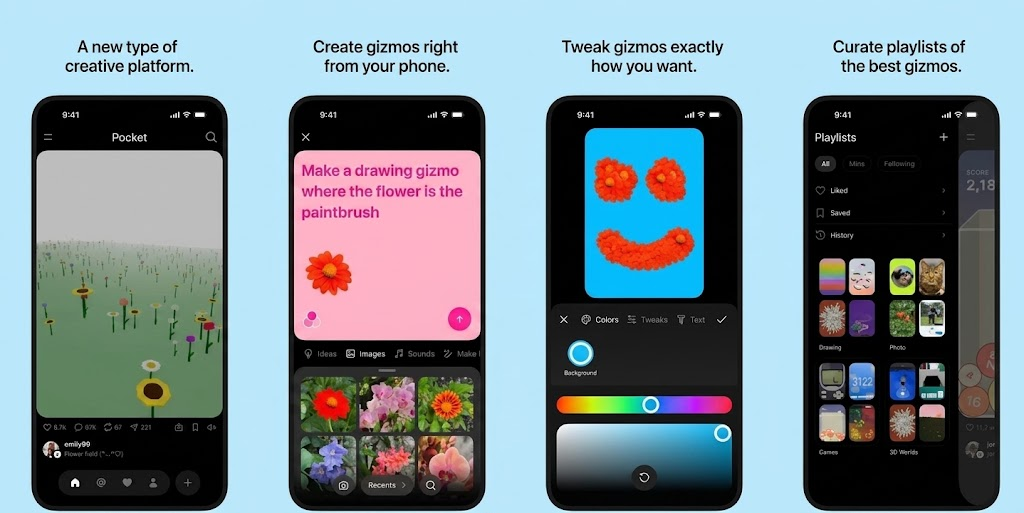
Now the toys. Pocket, Meta’s vibe-coding app, is live for all US users. Describe a small interactive “gizmo” in a prompt, and it builds it.
There’s a feed, too, where people browse, like, and comment on each other’s creations. That’s an organic surface almost no brand has touched.
Same catch as ever, though. Generation is easy. A concept worth generating isn’t.
And for the Reels factory: Edits added folders and bookmarked text and caption styles, plus AI photo-to-video for US users.
Minor features, but real time saved, and useful for keeping brand consistency when several people post under one account.
Reddit’s ChatGPT citations almost disappear, and other platforms rewrite the AI content rulebook
Four days is enough time to lose 86% of your visibility. Just r/AskReddit.
One does not simply stay cited: Reddit’s share of ChatGPT Search citations fell from 3.83% to an average of 0.52% between Aug. 14 and Aug. 17, per Promptwatch.
Google’s AI Overviews and AI Mode showed only a gradual slide, so this looks ChatGPT-specific.
The data shows when, not why. Watch your own citation trends instead of trusting a stable source hierarchy.
And AI keeps being a training stock, apparently: A Connecticut streamer filed a class action against Twitch and Amazon for training AI on his content without permission.
Twitch’s own product chief said nobody would opt in if it were opt-in. Not exactly a good statement to make, is it?
Slop has a scoreboard now: More than a million people used LinkedIn’s “seems like AI slop” report in two weeks. We wonder if that’s a new record for such a feature.
Content LinkedIn defines as slop now gets 40% fewer views.
And YouTube is tidying up: Copyright and AI likeness claims now live in one “Claims” tab, with four dispute categories including parody and public interest.
Likeness claims carry no channel strikes.
The signals keep showing how AI features and new problems in marketing arrive together.
What if doing nothing beat 90% of professional fund managers?
The investment industry sells complexity. Research. Timing. Alpha.
The data tells a different story. Over any 20-year period, a simple world index fund has outperformed more than 90% of professionals. Most investors who try to beat the market end up paying more in fees to underperform it.
The edge isn’t intelligence. It’s patience.
But patience is hard when your portfolio feels abstract. A passive fund is just a ticker on a screen. The thousands of companies inside it, the businesses you actually co-own, stay invisible.
90 Percent fixes that. Every week, it pulls one company at random from the world equity index and tells you what it actually does.
- The Brazilian company that makes the electric motors inside almost everything that spins.
- The Florida company that sells your airline its spare parts at half the price.
- The Japanese hardware company hiding inside every factory.
One company. Every week. Yours to discover.
LinkedIn Ads have a reputation problem, and it’s mostly earned. But can you improve them?
Almost everyone has been in that boat…
LinkedIn Ads end up being expensive and tough to manage even if they show promise, so we just set the whole thing aside. But is that always the right play?
Michelle Morgan still rates it as one of the best lead gen channels, with the caveat that almost nothing you learned on Meta or Google transfers cleanly.
Here’s what may change the whole picture, according to Michelle.
1) The structure moved under your feet: LinkedIn reorganized in early 2026. Campaigns now hold objective, budget, and schedule.
Ad sets, what used to be called campaigns, are where targeting, format, and bidding live. If your old mental model feels wrong, it is.
2) Your objective rewrites your results: Same audience, creative, and bids: switch Engagement to Website Conversions and CTR falls while CPC rises, because the platform narrows who it serves.
If you’re judged on traffic and you picked conversions, that’s just the wrong objective.
3) Format benchmarks vary more than you’d expect: Text ads sit at 0.02–0.08% CTR. Message ads hit 3–5%, conversation ads 4–6%. Document ads (0.40–0.80%) are worth a look: tease 10–25% of an asset, gate the rest.
The tip: Use campaign-level budget controls, or test fewer formats at a time.
An ad set runs one format and holds its own budget, so three formats means three separately funded ad sets, none with enough spend to tell you anything.
4) The defaults are working against you. Audience expansion and the LinkedIn Audience Network both widen what you deliberately narrowed.
Maximum Delivery bidding will clear your budget fast, most often not with the quality result you want.
The fix: Uncheck the first two, bid manually from a low floor, raise it when results justify it.
5) Cold bottom-of-funnel asks don’t survive $5–10 clicks. Demo requests to a first-touch audience buy impressions.
Engage first, then remarket with the harder ask, and keep audiences roughly 20K–80K while you do.
The verdict: These tips can improve LinkedIn Ads results but don’t expect the economics of it to magically work for any kind of business and product.
High LTV B2B is still the bread and butter.
When everyone’s using the same marketing playbook, psychology gives you an edge

Most marketers pull ideas from the same formulas, frameworks, and templates.
There’s no harm in using what works—but it also means your offer risks blending in.
But marketers who understand how people actually make decisions know how to package powerful offers and stand out—even when they’re selling similar things as their competitors.
Want to receive one psychological principle each week so you sharpen your instincts for positioning and persuasion?
Creators are brand builders first, sales engines second
While performance marketers keep trying to turn creators into direct-response machines, brands are leaning into what creators actually do best: making people love your brand.
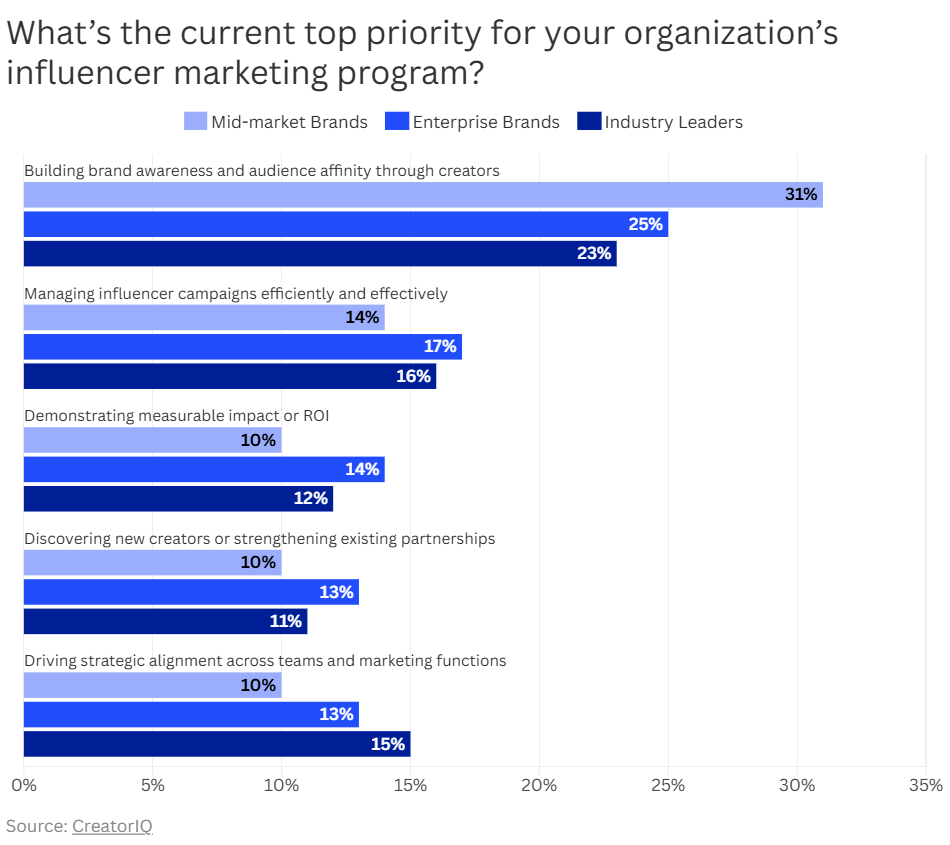
According to data:
- Building brand awareness and affinity is the clear #1 priority, led by Mid-market brands (31%), followed by Enterprise brands (25%) and Industry Leaders (23%).
- Operational efficiency (14–17%) and proving immediate ROI (10–14%) lag far behind, showing that brands treat creator programs as brand equity engines rather than quick cash registers.
What you should do: First, stop expecting every creator post to trigger an immediate checkout.
Influencers excel at building trust and top-of-funnel mental availability. The kind of brand resonance that warms up prospects and makes your downstream conversion ads cheaper.
Actionable tip: You might want to evaluate creator partnerships on brand lift, branded search spikes, and audience sentiment rather than strict last-click attribution models.
MESSAGE OPTIMIZATION: Test your main offer’s message for free. You watch the lift on a live scoreboard, in your own audited revenue per visitor. One recent test: +139% RPV, $7,457 verified net gain. Beat your control or pay nothing. See it and check your fit.*
GOOGLE: Saw a generic globe instead of your favicon in search results? That was a bug on Google’s end, not yours. The company confirmed the glitch and says it’s fully fixed as of August 23. Worth a spot-check, a missing favicon could cost you clicks.
DISCORD: Rewarding players for finishing a tutorial beats making them sit through a pre-roll. Play Quest+ pays out on real in-game actions, with EA’s Battlefield 6 as the first campaign in early September. Account-linking is the catch and the point, since it makes engagement measurable.
GOOGLE ADS: Running a clean Search experiment no longer demands deep knowledge of test structure. A new few-click flow in Ads Manager handles the setup, rolling out through September. Performance Planner also previews bid and budget changes. Note you can now A/B AI Max elements, which is the test worth running first.
GOOGLE ADS: Loyalty members now get their own bidding toggle under customer retention settings, separate from the lapsed-customer controls, plus the option to surface member benefits in eligible countries. Splitting retention into two levers means you can finally stop paying win-back prices for people who never left.
*This is a sponsored post.
They have no flesh, nor feathers, nor scales, nor bone. Yet they do have fingers and thumbs of their own. What are they?
You can find the answer here.
Interested in advertising in one of our newsletters?
Connect with over 100,000 of the world’s best marketers who read a newsletter by Stacked Marketer.