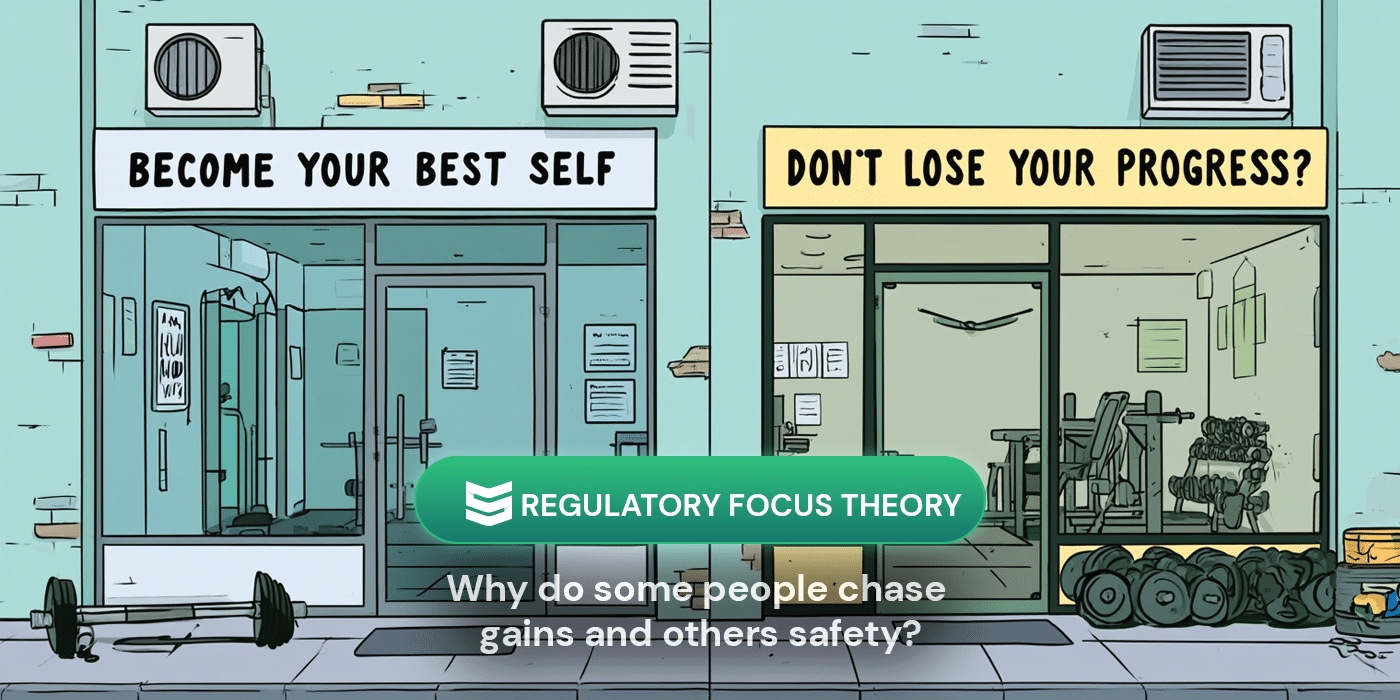
One fitness ad promises you’ll become your best self. Another warns you’ll lose everything you built. The industry is the same. The wiring is opposite. Why?
Well, because of Regulatory Focus Theory. Some brains chase gains. Others dodge losses. Marketers who match the message to the motivation get paid.
Psychologist Tory Higgins split self-regulation into two systems:
- Promotion focus chases ideals, growth, and advancement.
- Prevention focus guards against failure, craving safety and certainty.
Researchers say prevention-focused people weigh losses more heavily and promotion-focused people weigh gains more heavily.
Matching copy to “regulatory fit” may lift engagement and conversions.
Picture two students at the same desk. One studies to earn an A. The other studies to avoid flunking out. It’s the same thing, but one is reaching forward and the other looks behind.
The catch: everyone runs both systems.
So stop guessing which brain you’re selling to and test all the approaches below.
Three ways to leverage Regulatory Focus Theory
1) Sell forward motion to promotion buyers
Aspirational audiences want advancement. Show them who they could become.
MasterClass sells mastery, never fear. Its pre-roll spots are built like movie trailers, the company literally calls them that.

Gordon Ramsay dices an onion, then promises anyone can master the art of food with the right teacher.
Nobody gets warned about staying mediocre. They get pulled toward the better version.
For promotion segments, lead with what unlocks, expands, or levels up. Bench the fear entirely.
2) Guard the downside for prevention buyers
Prevention-focused people fear loss more than they want gain. So sell protection.
Volvo built decades of equity here. Rather than boast speed or luxury, it points to videos of real people saved by its three-point seatbelt.

That’s not adrenaline. That’s a parent picturing the worst case and buying insurance against it.
Frame the offer around what buyers keep or avoid losing. Emphasize reliability, warranties, and proof.
Skip the transformation story and show them the airbag.
Reassurance often converts better than hype.
3) Flip the frame your category ignores
January fitness marketing is relentlessly promotion-framed. New year, new you, endless upside.
Chipotle went the other way, rebranding Quitters Day, the second Friday of January when resolutions get abandoned, as No Quitters Day.
The frame moved from starting to not stopping. Over 190,000 athletes competed across six cities, driving more than 700 million earned media impressions.

Oh, and Lifestyle Bowl revenue climbed 20%.
What should you do: write both versions of every top-of-funnel headline, then route readers to whichever fits
One warning: hammer fear constantly and your brand gets tagged with risk.