
Hi there.
Here’s something mildly unsettling: asking someone if they plan to buy something makes them more likely to buy it.
Which means every survey you’ve ever filled out may have quietly nudged you somewhere.
And we’ll cover this phenomenon in today’s newsletter. Did you plan to read it?
How one advertiser 18x’d ad spend and watched customer value go up
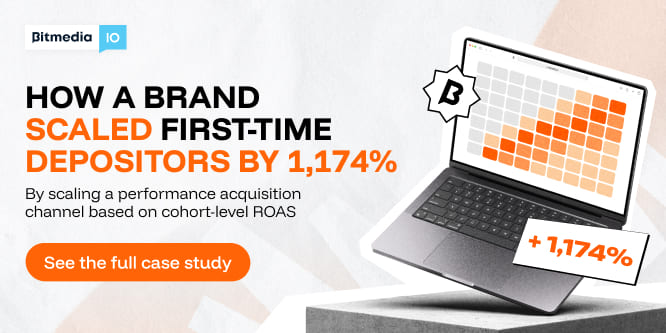
More budget, higher CAC, weaker users. Scaling usually goes the way of most sequels: bigger production, worse cast.
Cohorts, not blended averages: Bitmedia matched every month’s depositors against that month’s spend, then tracked payback through D30, D90, and D180.
Budget follows proof: Spend only increased where the cohort economics held, which is how first-time depositors climbed 1,174%.
Quality went up, not down: Value per depositor rose from $64 to $147. D90 ROAS moved from 1.24x to 2.68x.
Markets matter too: Turkey returned 45% more value per depositor than the channel average. France, 37%.
Worth the read: The breakdown lays out the exact payback milestones and scaling triggers you can copy.
Stacked Marketer readers also get a 10% bonus on their first deposit with promo code BITSTACK, valid until 30th September 2026.
Mere Measurement Effect

A friend sees your old laptop and asks whether you’re getting a new one soon. You weren’t. Now it’s 1am and you’re deep in a spec comparison.
That’s the Mere Measurement Effect. Being asked about a future behaviour makes you measurably more likely to do it. Nobody persuaded you, they just asked.
How it works: you don’t have a ready opinion, so your brain builds one to answer.
Researchers Morwitz, Johnson and Schmittlein ran this across consumer panels. Merely asking about intent to buy a car or computer raised actual purchase rates.
Science also claims a catch. Ask low-intent people the same question repeatedly and you push them further away.
It shows up everywhere.
- Are you registered to vote? nudges turnout.
- See you in six months? gets you back in the dentist’s chair.
Marketers get the question for free.
Three ways to leverage Mere Measurement Effect
1) Survey your happy customers, deliberately
A large financial services firm let researchers survey over 2,000 members of its customer relationship program. Then everyone got tracked for a year.
The surveyed group was more than three times as likely to open new accounts. They were less than half as likely to defect, and more profitable.
Nobody sold them anything. One satisfaction survey was the entire intervention.
Our take: run the survey on customers who already like you. Surveying unhappy ones measures their dissatisfaction and makes it stick.
2) Turn product discovery into a quiz
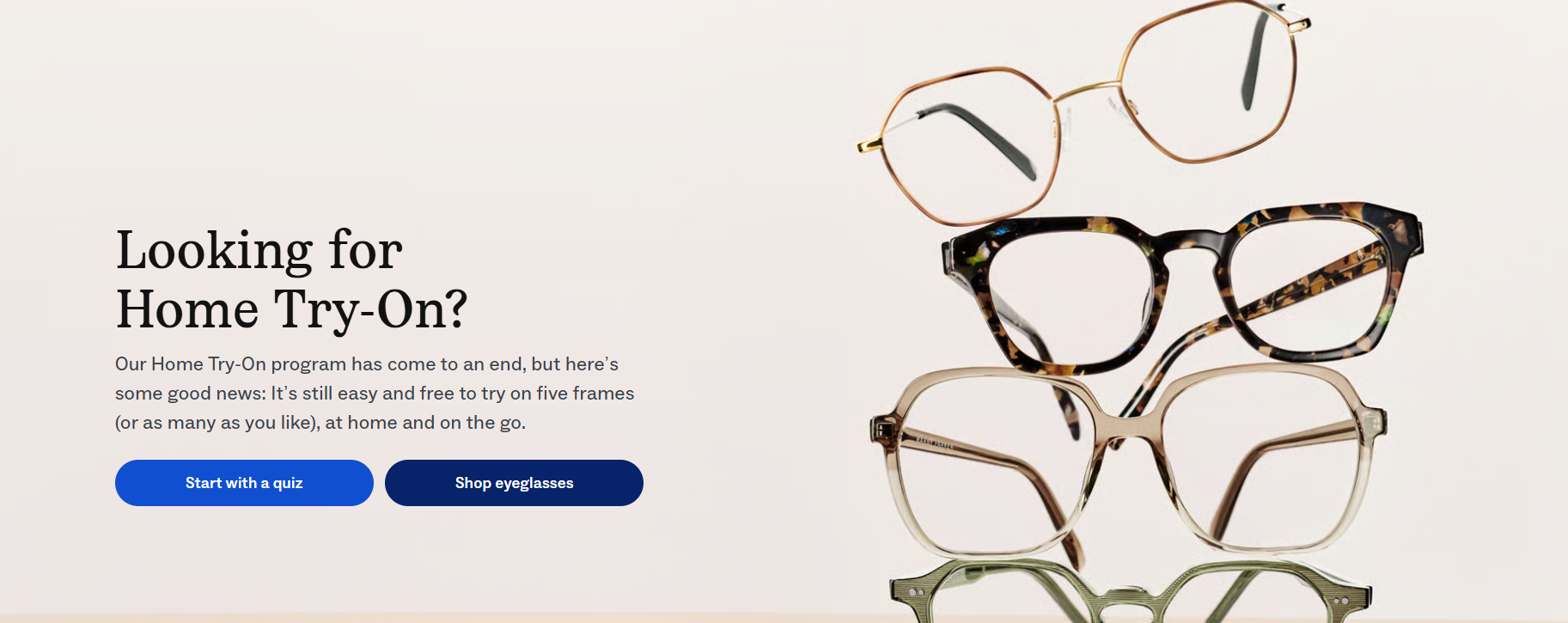
Warby Parker won’t just show you glasses. It asks about face shape, colour preference and style before recommending anything.
Every answer is a small measurement.
By question five you’ve told yourself, in writing, what you want. Then five frames arrive at your door free, with no card required.
The Home Try-On experience has been credited with a roughly 50% lift in purchase likelihood.
Skip the vanity questions. Ask only what a buyer would have to decide anyway.
Our take: a quiz isn’t a lead magnet with extra steps. It’s a machine for manufacturing stated intent.
3) Ask users to declare a number
Strava doesn’t just log your runs. It asks you to set a target first: distance, time, elevation, or activities per week.
That one input changes behaviour. Strava’s 2025 Year in Sport found weekly goal-setters were roughly 10 times more likely to hit ten weeks running.
Earlier Strava data showed athletes who committed to three activities a week instead of two finished the year with twice as many logged.
Nobody was nagged into it. They typed a number into a box.
Give users a field to state their own target, then report progress back. You’re not tracking usage. You’re manufacturing it.
AI rewired your customers’ buying habits. Your playbook didn’t get the memo

Search, discovery, decisions: AI completely changed all three, while most marketing plans still run like it’s 2023.
Two days, zero dollars: Prepathon 2026 puts 20+ experts on stage to unpack AI-powered experiences, shifting customer journeys, ecommerce, and automation.
Sessions with actual teeth, including “Human or AI? Who gets the sale?” and what AI-native products really cost to run.
September 22–23. Free online. Limited slots.
Register for free for Prepathon 2026.
We’ll see you there.
GOOGLE: New Google Ads data shows 1-2-word queries fell from 42% to 24% of impressions since January 2025. Conversions moved harder. The 3-4-word bucket went from 20% to 46% of conversions. Seven-word queries quadrupled. The tail is now the dog, apparently.
OPENAI: Say goodbye to the landing page. Its new Sponsored Agents pilot turns an ad click into a branded chat inside ChatGPT, with Wayfair already testing. Lower friction, sure, but the platform now owns the customer journey you usually pull onto your own site.
REDDIT: Holiday gift research is running on human opinion. Nearly 70% of US Redditors trust the platform’s gifting advice over AI recommendations, and 74% actually want brands in those conversations. Over half spent $1,000-plus last season. Good to know if this is your channel.
ICYMI, last time we looked at the Theory of Planned Behavior.
The “Planning, trying, doing” Crew.
Interested in advertising in one of our newsletters?
Connect with over 100,000 of the world’s best marketers who read a newsletter by Stacked Marketer.